Message Planner
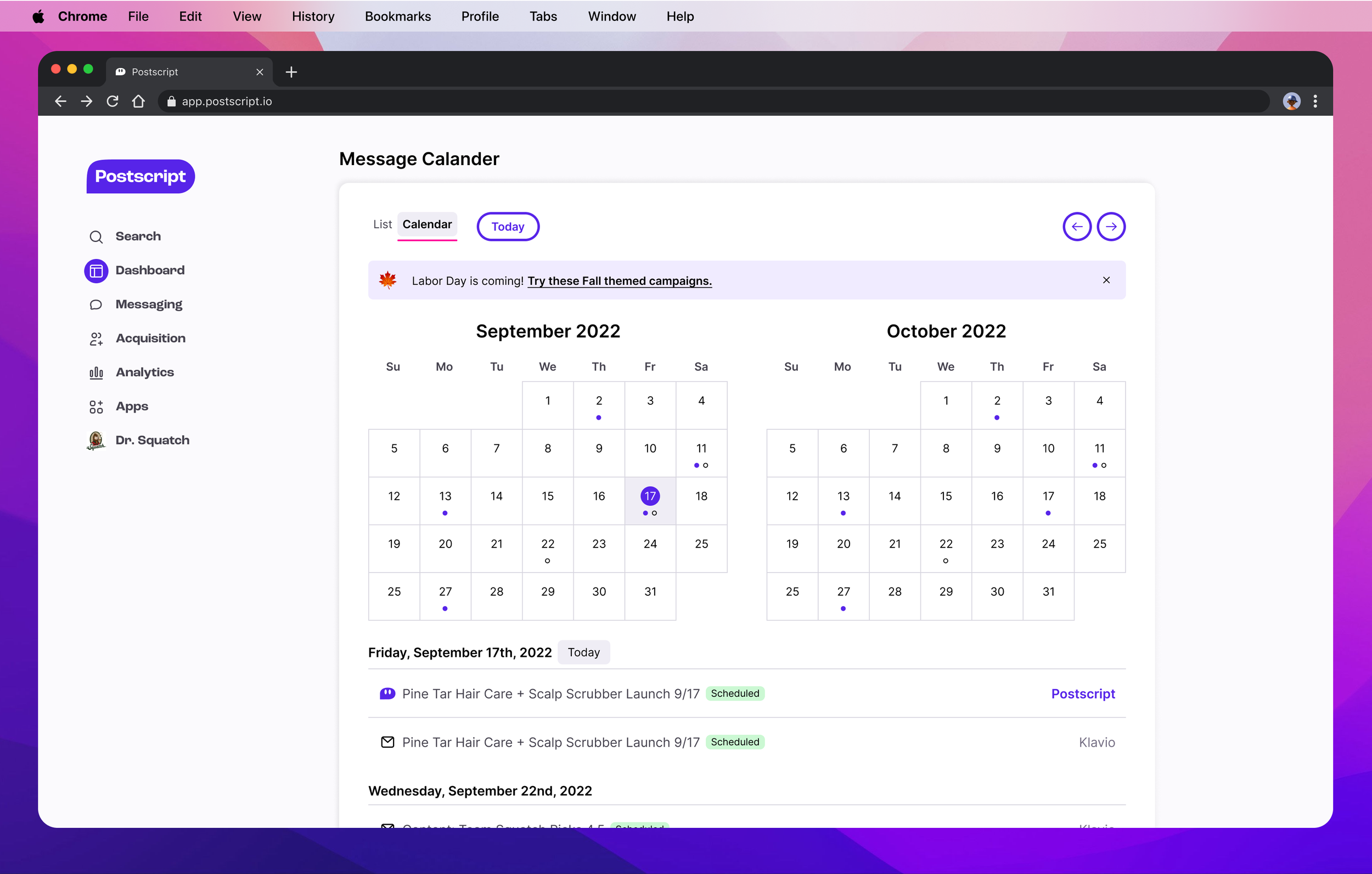
Project Overview
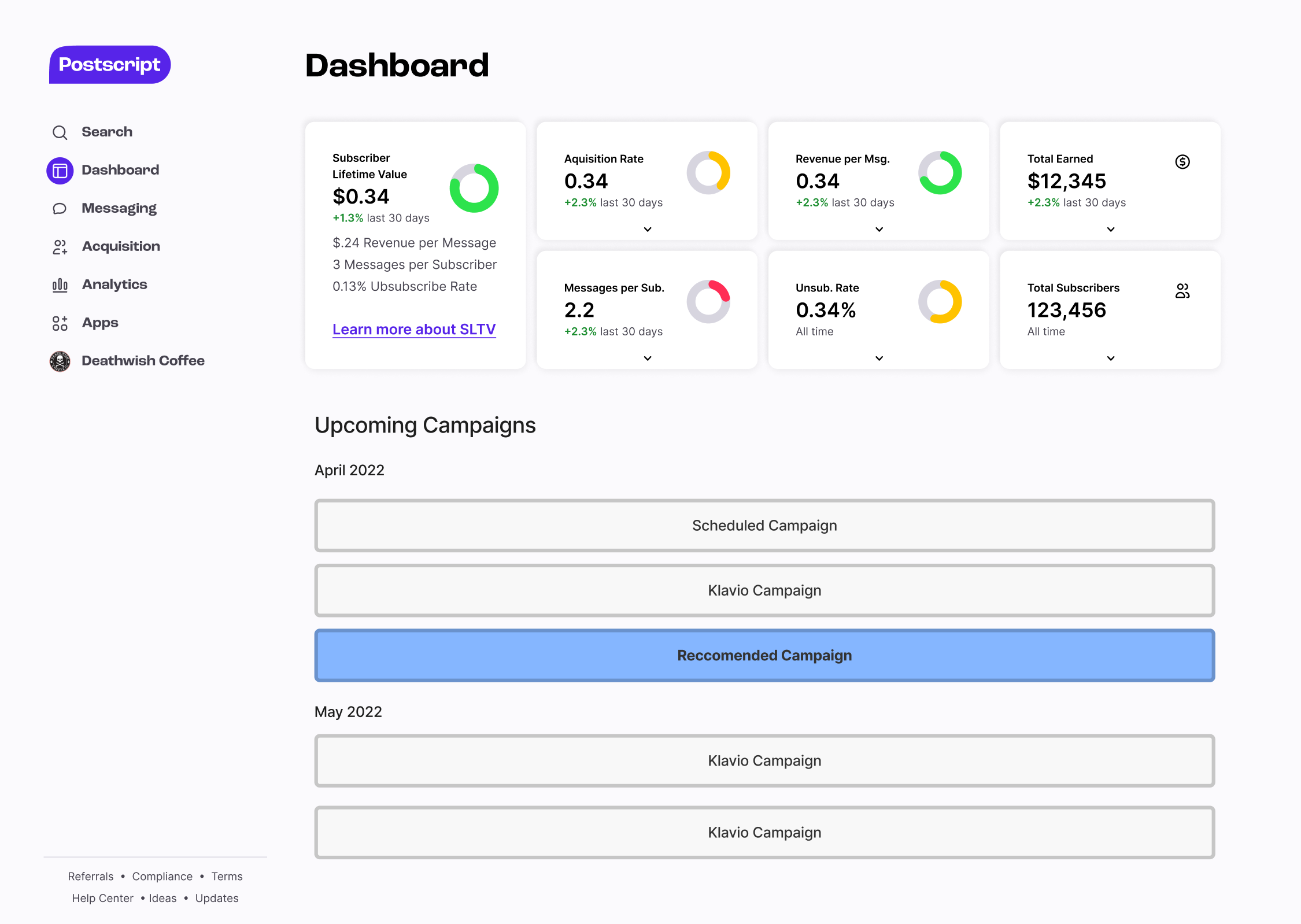
At Postscript, we strive to provide our merchants with the tools and resources they need to create powerful and effective SMS marketing campaigns. However, a good SMS marketing strategy goes beyond crafting great customer messages. Subscriber lifetime values remain influenced by several factors, including acquisition rate, revenue per message, messages sent, and unsubscribe rate.
Among these factors, messages sent were crucial to my product team: Core Experience. Therefore, our team charter included exploring new methods to influence merchant behavior to get them to send more messages to their subscribers. With this in mind, my team set out to create a unique message planning tool, capable of informing merchants of their upcoming SMS strategy and offering suggestions to help increase their subscriber lifetime value.
Problem
How might we design a tool to encourage merchants to send more SMS messages to their customers, therefore increasing their subscriber lifetime value?
Ideation & Discovery
A common finding in our customer interviews with merchants and agencies was a tendency to prioritize email marketing campaigns over SMS campaigns. This behavior is due to several factors:
SMS Marketing remains a new, emerging method of brand marketing.
Merchants often worry that sending SMS messages can be considered "spammy" and perceived as more annoying than valuable.
The email has been a prevalent method of brand marketing for decades, so more merchants have more familiarity with email marketing strategy than SMS.
With these challenges in mind, we initiated a new round of customer calls focusing on how brands strategize SMS campaigns alongside email campaigns. Our findings revealed that merchants who send a healthy amount of messages to their customers use external spreadsheets, or tools like ClickUp, to organize, plan, and strategize their SMS campaigns in conjunction with their email campaigns.
We also conducted a competitive analysis to understand similar tools and features our competitors currently utilize.
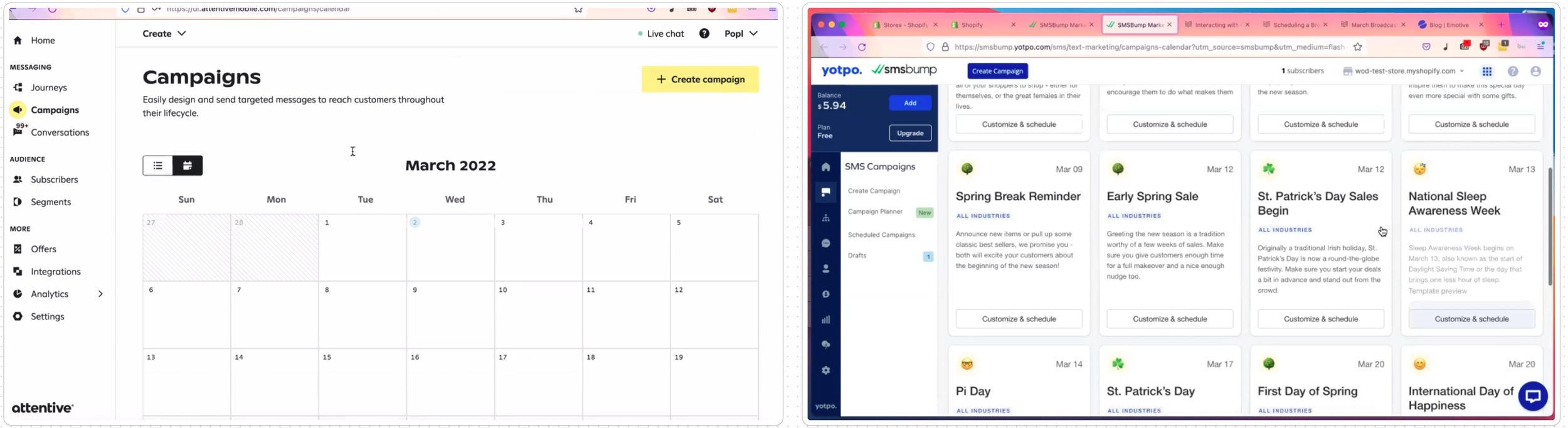
Examples of our competitive analyses. Here, we compared planning and calendar tools from Attentive and SMSbump.
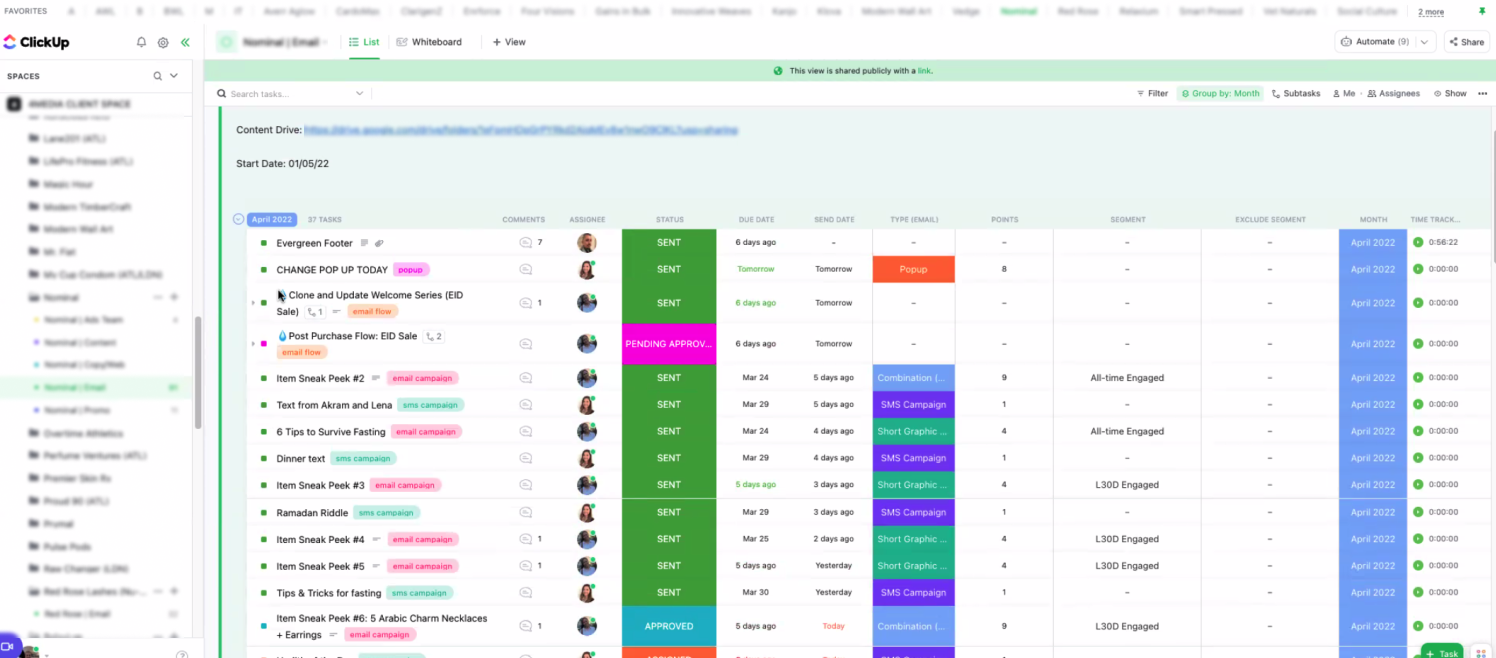
A screenshot from our customer calls from an agency client using ClickUp. Here, they organize both their SMS and email campaigns into one large spreadsheet to strategize and plan their marketing strategy.
Design
Beginning with sketching and wireframes, I identified that the message planner should focus on a list and calendar UI. A list UI is similar to the spreadsheet format many merchants and agencies already use to plan and strategize their SMS and email campaigns. In contrast, the calendar UI gives merchants a top-down view of how rigorous their marketing strategy looks for the next two months.
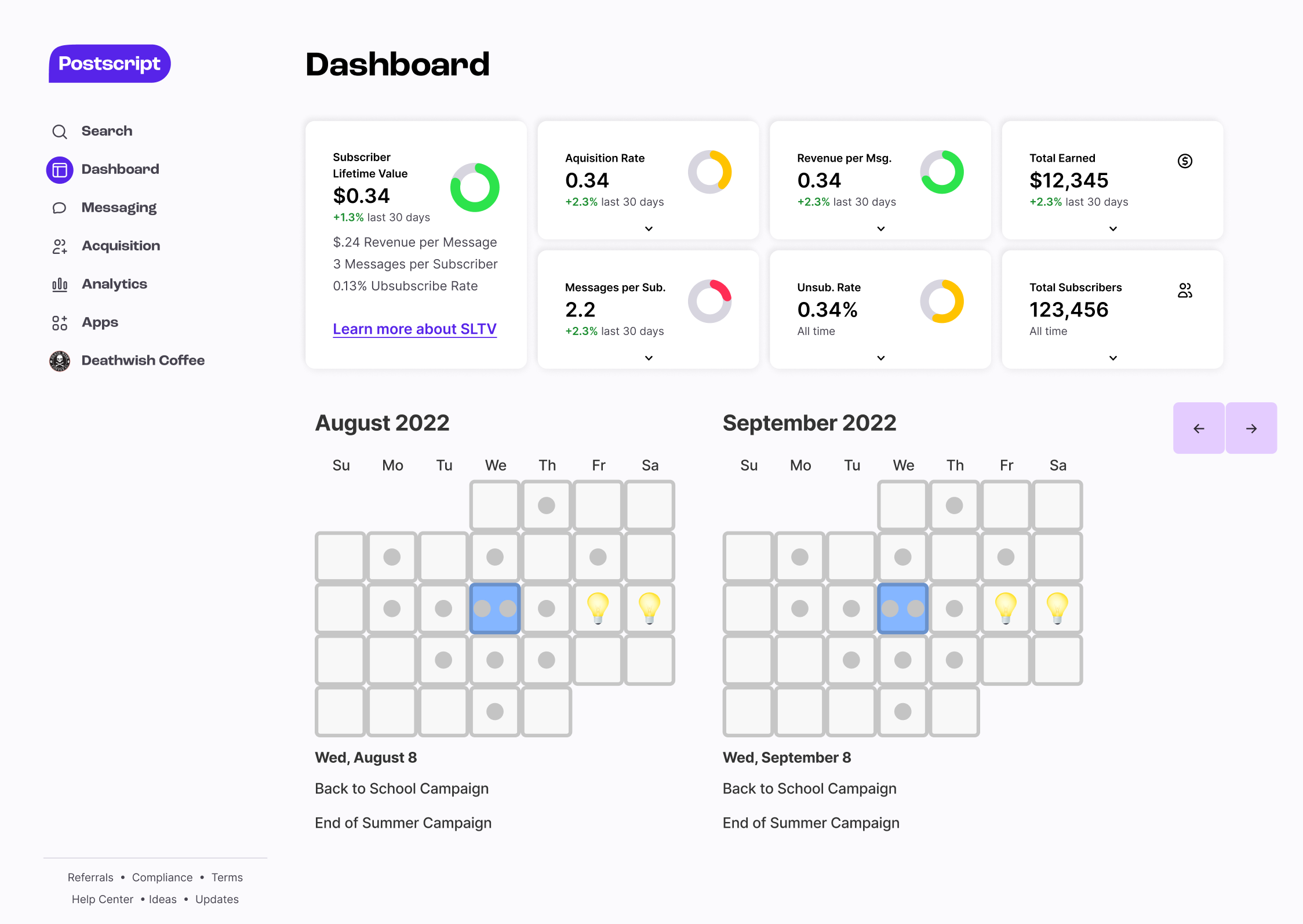
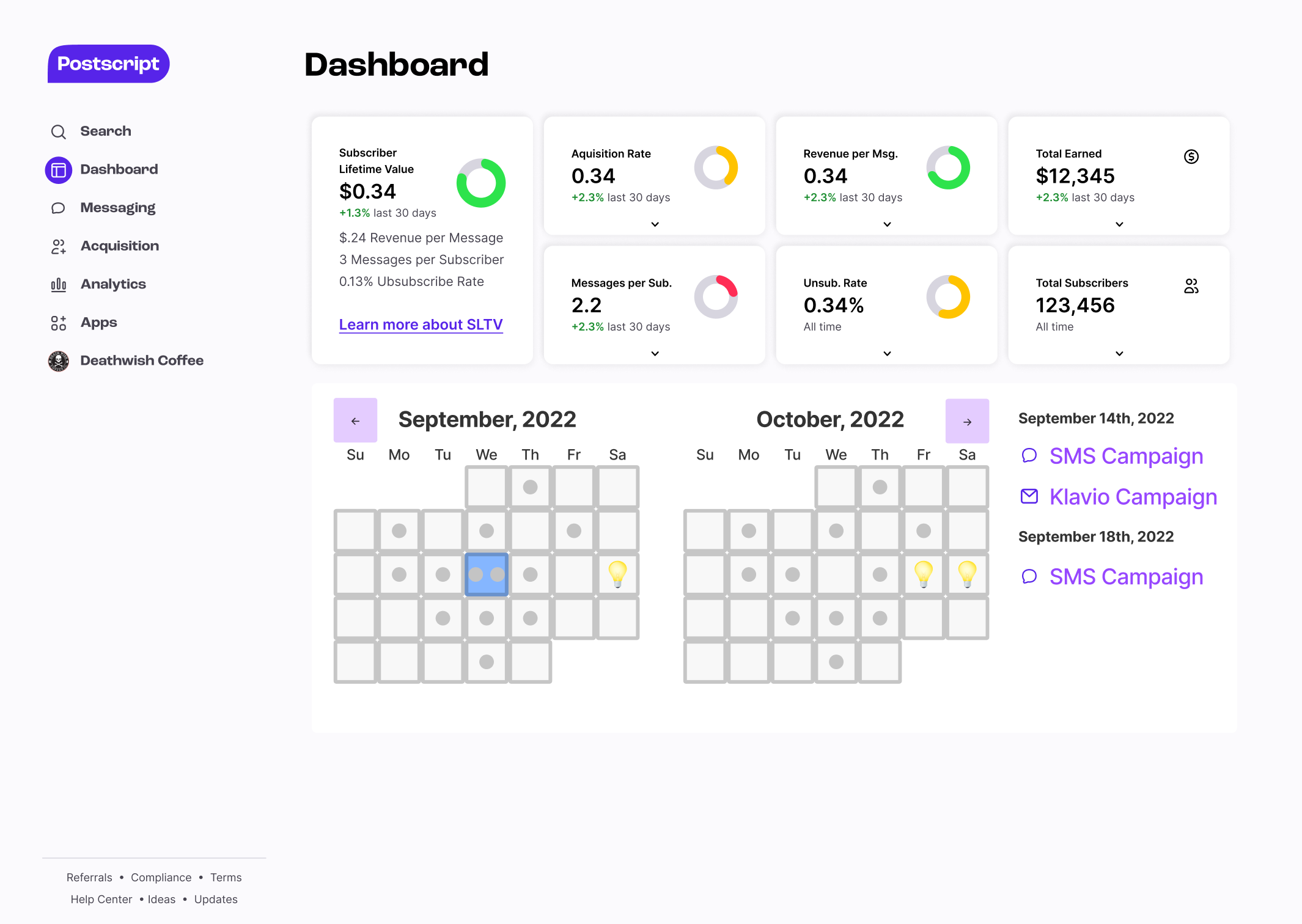
An ideal solution, as seen above, involves a hybrid between a list and a calendar, allowing the user to view all upcoming campaigns, and interact with the calendar to view any upcoming campaigns as well. This also allows the user to go back in time and see how their marketing strategy history as well.
During this period of design, I worked closely with one of our backend engineers on an integration with Klaviyo. Klaviyo is used by over 70% of our merchants as their email marketing platform of choice. Klaviyo’s API allows us to fetch any upcoming email campaigns a client has scheduled, as well as any previously sent campaign as well.

Early attempts at higher fidelity mockups demonstrated that a “side by side” approach would prove to be difficult, as I struggled to find enough horizontal space to fit titles for SMS and email campaigns.
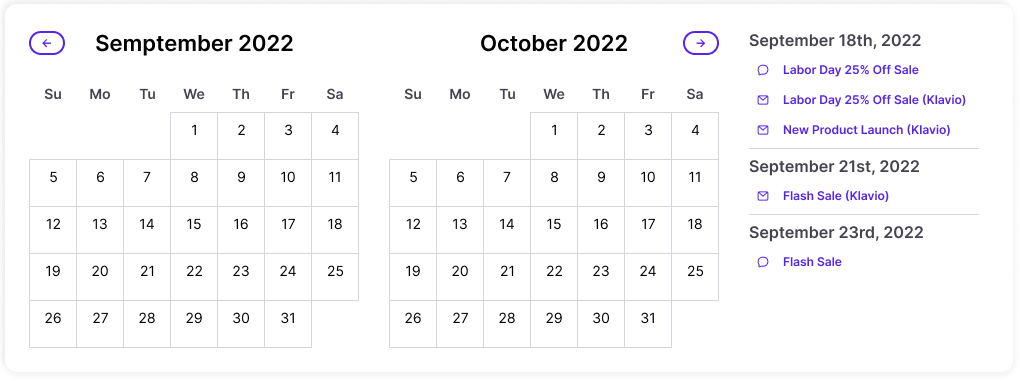
In reality, campaign titles are much longer than the examples I used above.
Moving towards a “stacked” design, with the calendar on top of the events list, I began to ideate through the design of the list, and explore how to best signify differences between Postscript and Klaviyo campaigns. A challenge here was to keep Postscript campaigns prioritized over Klaviyo campaigns.
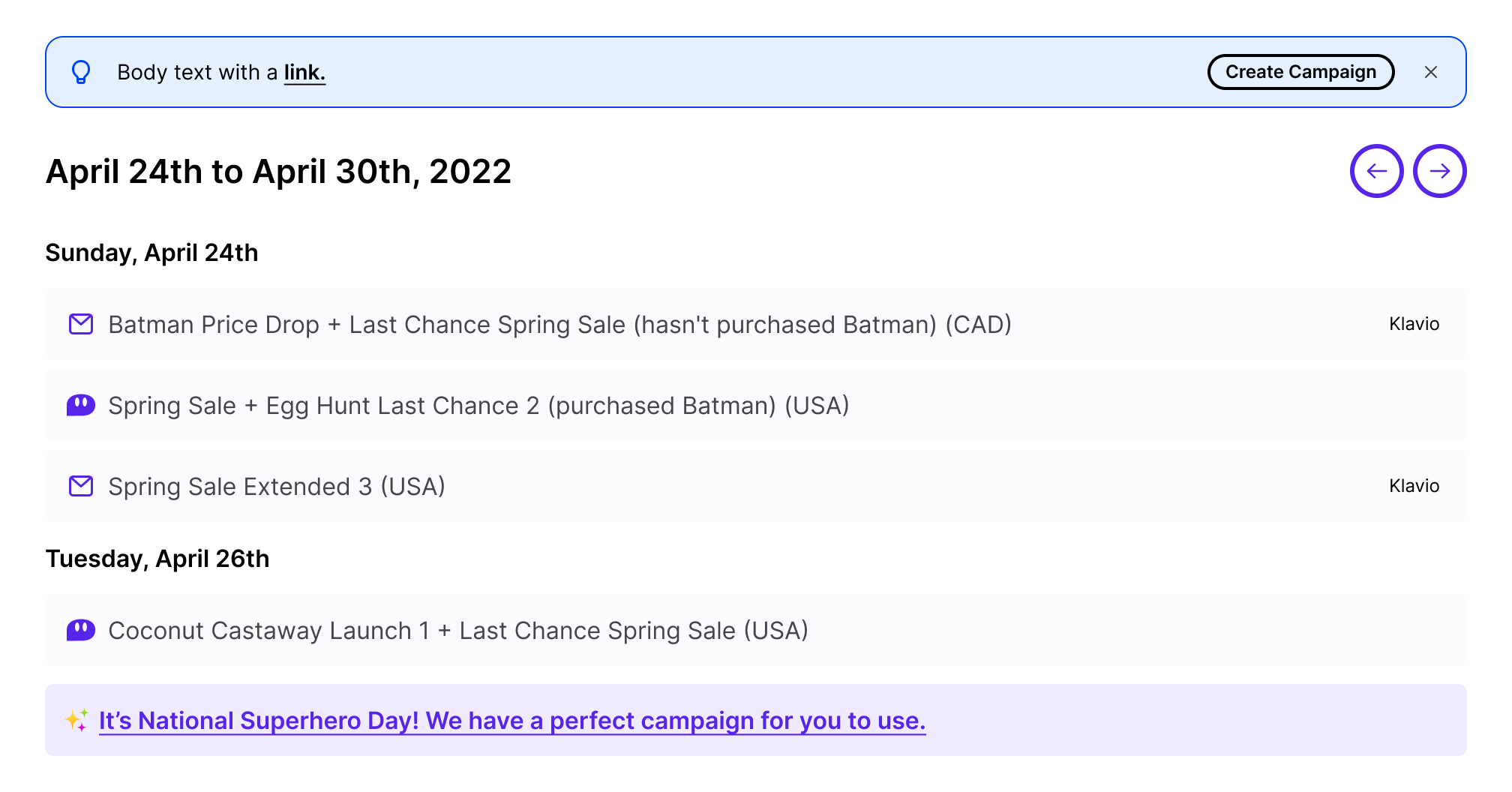
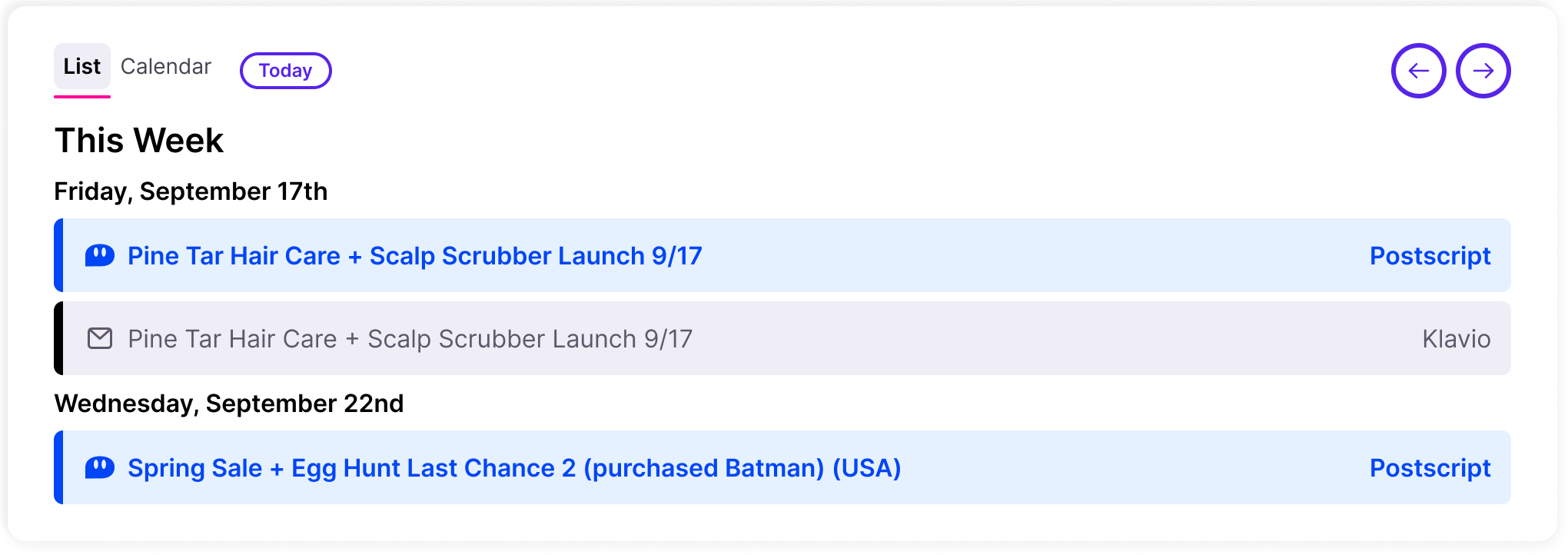
The final iteration of the events list below includes the affordance of viewing both past and future events, visual signifiers of each campaigns' status, and clear indications differentiating Postscript and Klaviyo campaigns.
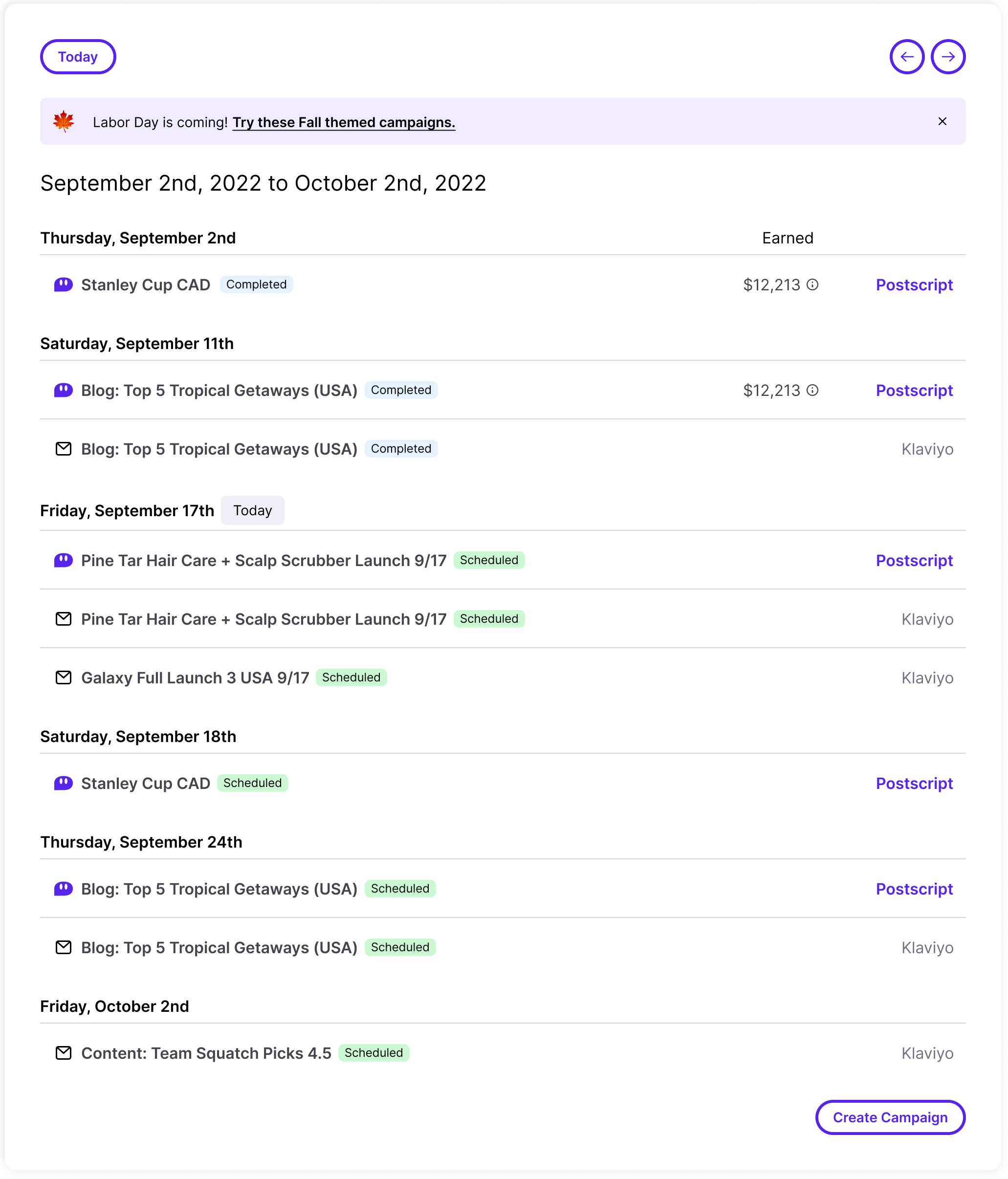
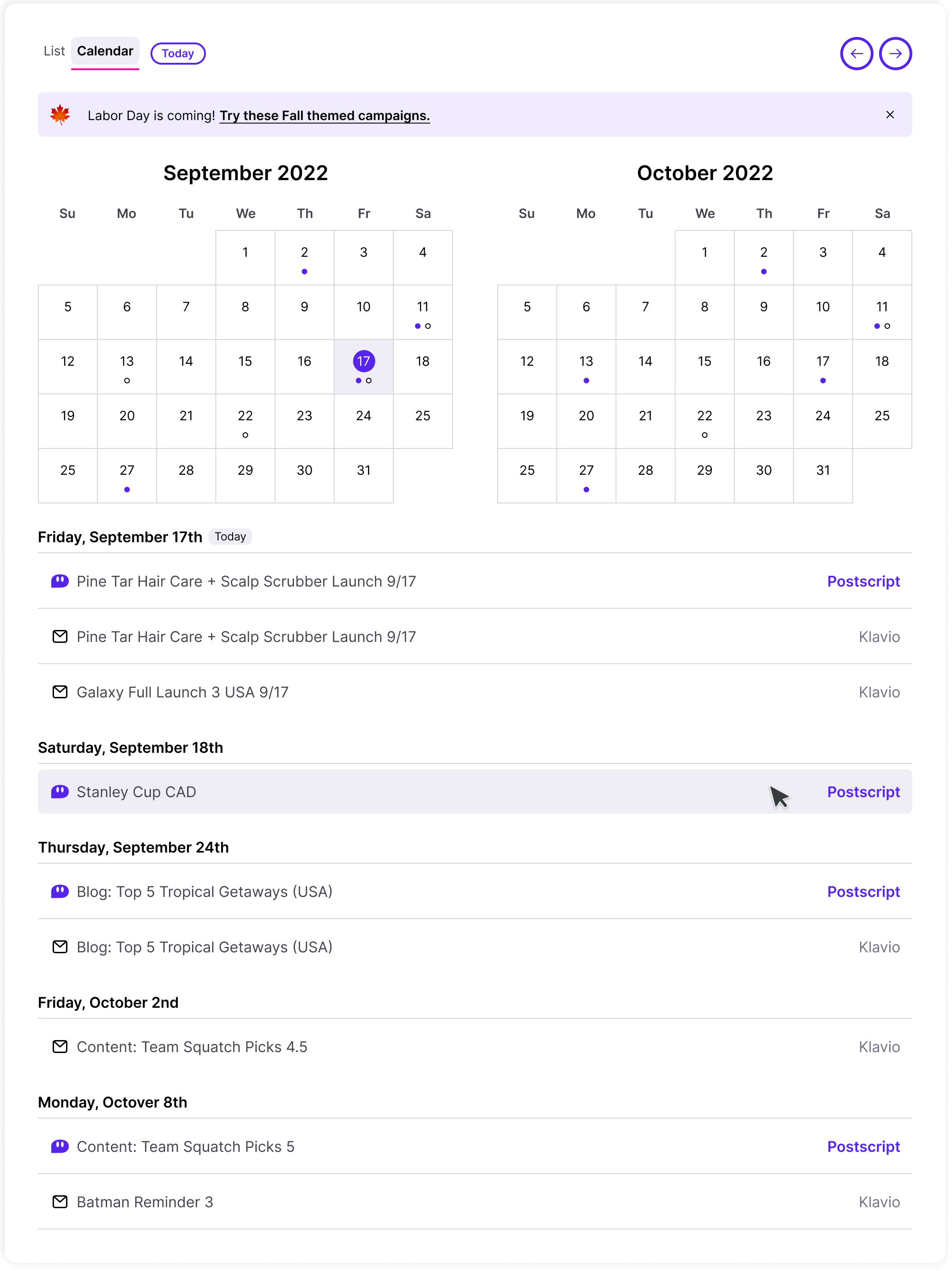
The introduction of the calendar provided the ability to signify future events on the calendar and add new interactions to adjust the contents of the list.
Results and Future Considerations
Before I departed from Postscript, I ran a usability test of the calendar with internal stakeholders. This test involved users selecting dates on the calendar and interacting with the list. I also included questions regarding the value of the events list and the calendar. Results showed that although both UI's were overwhelmingly valuable, the calendar + list UI provided the most value to merchants.
I additionally prepared planned customer calls and Amplitude dashboards to track events and interactions with the calendar. Plans were made for the next quarter to lead a workshop for all team stakeholders to brainstorm projects for more sophisticated recommendations within the message planner and other areas of our app.